
Early Readers
Showing 1–20 of 24 resultsSorted by latest
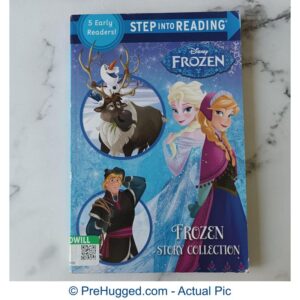
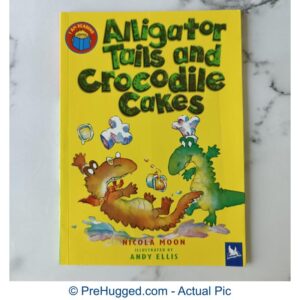
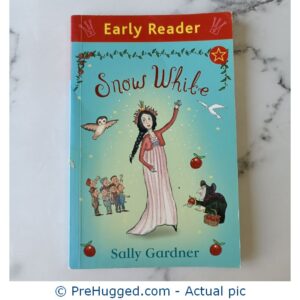
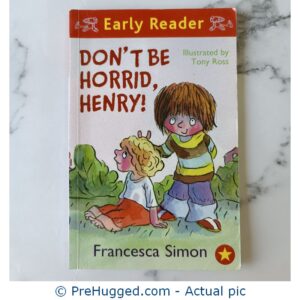
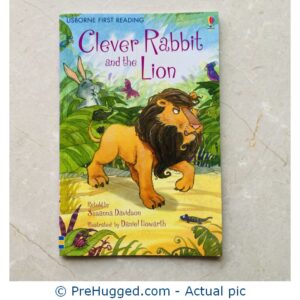
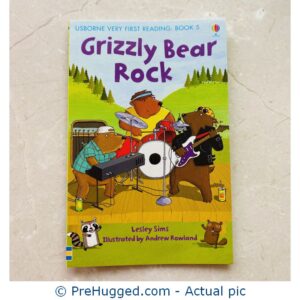
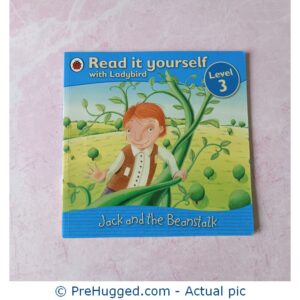
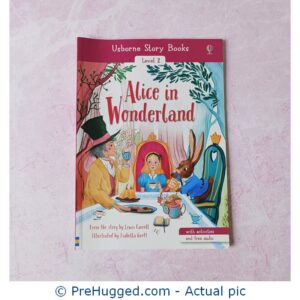
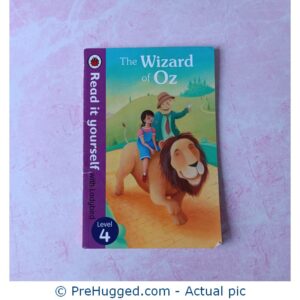
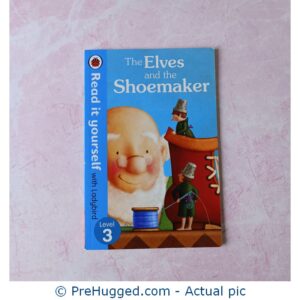
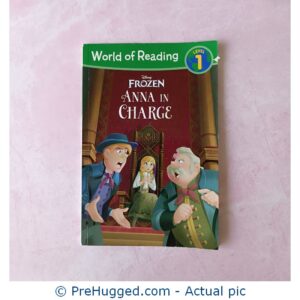
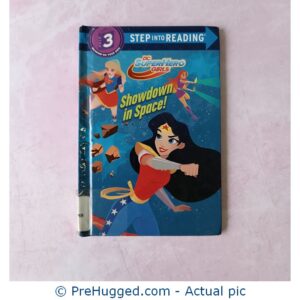
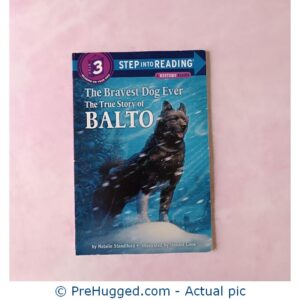
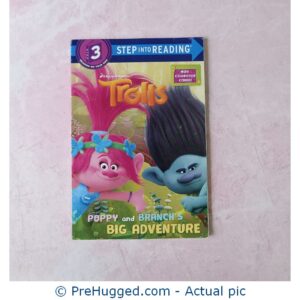
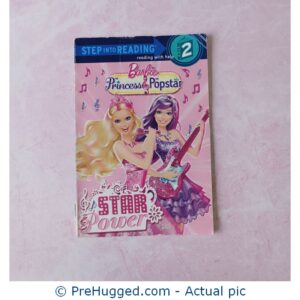
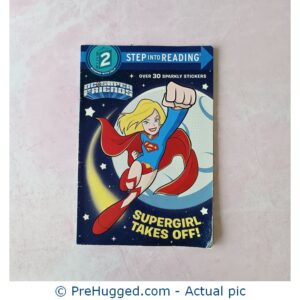
Showing 1–20 of 24 resultsSorted by latest
Early Reader Books: Helping Your Child Find Stories They Can Actually Read
The question parents ask most often at this stage is not “what should my child read?” It is “what can they actually read by themselves?” Early reader books exist to answer that question — short, illustrated stories written with accessible language so that a child who is beginning to read independently has real connected text to practise on, rather than sentences constructed purely around a phonics sequence.
This is a distinct category from phonics books, which are structured around a systematic decoding programme. Early readers are narrative first — the story is the point — and the language is shaped to be manageable, not to teach a specific phonics rule.
The Reading Transition These PreHugged Books Are Built For
Independent reading does not arrive on a birthday. You might notice your child at four or five beginning to join in with familiar lines from a book you read together often, or pointing to a word they recognise on a page. A little later, they may start attempting short sentences on their own, pausing at unfamiliar words, sometimes asking and sometimes guessing from context. By the time they are reading short books start to finish — slowly, perhaps, but independently — they are in the window these books are designed for.
At around four, many children can answer simple questions about a story and tell you what comes next in a familiar one. By five, many can sustain attention through a longer story session, recognise some letters and retell a sequence of events. These are foundations, not thresholds. Independent reading readiness varies considerably between children of the same age, and a child who is not yet picking up books independently at five is not behind — they are simply at a different point in the same transition.
The progression that early readers support runs from following a simple story with adult support, to reading short connected text independently, to managing slightly longer narratives and short chapters with decreasing help. These books sit in the middle of that arc — accessible enough to be genuinely readable, substantial enough to give the child a real story to follow.
Why Early Readers Work Differently From Other Books at This Stage
The defining characteristic of an early reader is that the text is shaped around what a developing reader can manage — not around phonics instruction, not around the richness of the story, but around the reader’s actual ability to get through the page independently.
That means manageable vocabulary, shorter sentences, reliable illustration support and narratives that are structured to be followed rather than merely heard. A picture book can be a profound reading experience even when a child cannot read a word — the adult reads it. An early reader is built for the child to read it. That is a different design intention, and it matters when you are choosing.
What this format makes possible is the specific experience of completing a story independently. Following a character through a beginning, middle and end — understanding what happened, what came next, how it resolved — is comprehension practice in the most natural form it takes. Child development guidance identifies story sequencing, answering questions about text and narrative tracking as meaningful literacy foundations at this stage, and an appropriately matched early reader gives a child the opportunity to build those skills through actual reading rather than through exercises.
This is also why the match between the book and the child matters more here than in almost any other category. A story book that is too hard to read independently simply becomes a read-aloud — which is still valuable, but not what an early reader is for.
Finding the PreHugged Book That Is Actually the Right Difficulty
Age on a cover is a starting point, not a guarantee. A useful practical check is this: can your child read most of the words without stopping? Does the reading sound reasonably smooth, or is every sentence a struggle? And — this one matters as much as the others — can they tell you what the story was about when they finish?
A child who can decode most words accurately but cannot follow the story needs a book with a simpler narrative, not a harder one. A child who understands everything easily but trips over many words needs a slightly less demanding text. Both are reading; neither is quite at the right level yet.
Beyond difficulty, consider how the book is built. Look at words per page and sentence length — a page of three short sentences reads very differently from a page of dense prose, even if the vocabulary is similar. Look at whether the illustrations are doing genuine work: supporting meaning and context rather than simply decorating. Look at whether the story has a character your child will actually want to follow. A book that is slightly easier than a child’s maximum reading ability is often a better independent-reading choice than one that technically stretches them further, if the subject holds their interest.
One thing worth knowing: reading-level numbers do not translate across publishers. Level 3 from one series is not the same demand as Level 3 from another. Use the level within a series as a progression guide, not as a universal benchmark.
If your child is working through a structured phonics programme at school, their teacher is likely choosing decodable texts specifically aligned to the sounds they have been taught — that is a different purpose from what early readers serve. Both have a place; they are not interchangeable.
What Makes a Title Worth Choosing — and How This PreHugged Collection Is Selected
The books that make it into this PreHugged collection are chosen by parents who are asking the same question you are: is this something a child can actually read, or is it just labelled for their age?
What is looked for: text that is genuinely accessible at the reading stage the book is positioned for — not just short sentences, but sentences that flow as a story rather than as reading exercises. Illustration support that helps a child stay oriented in the narrative without making the text redundant. Characters and stories that give a child a reason to keep reading. And series with meaningful level progressions — where moving from one book to the next reflects a real increase in what the text asks of the reader.
Publishers such as Usborne, Ladybird and DK consistently meet that standard in their early-reading lines — not because they are imported, but because their graded series have been developed with readable typography, tested level progressions and narrative quality that holds up across a range of reading stages. These are titles where the level means something, and where the physical production — clear print, robust binding, appropriate text layout — supports the reading experience specifically.
What does not make the cut: books that carry an age label but have text density or vocabulary that makes independent reading at that age unlikely; collections that mix early readers with phonics decodables in a way that makes the reading purpose ambiguous; titles where the story is too thin to give a child anything meaningful to comprehend.
The photos of the exact book copy, and on many books actual video too, are here because in this category, seeing the actual book copy matters. You are choosing a book your child will use as a reading tool, and its specific condition is part of that choice.
The PreHugged Check — What We Look for in Every Early Reader
The condition risks in a used early reader are more specific than they appear. A marking over a word is not cosmetic — it is directly in the path of a child who is practising reading that word. A loose page near the end of a story breaks a narrative a child has been working to follow. A faded or blurred line of print creates a difficulty that has nothing to do with the child’s reading ability.
Every copy in this collection goes through the PreHugged Check before it is listed. For early readers, this means pages are checked to confirm they are all present and in the correct order. Text is checked for markings, writing or stamps that would obscure words or sentences — because in this format, the printed text is what the child is there to read. Binding is checked for firmness, because early readers are opened repeatedly and handled by children who are still developing the physical habits of book use. Overall condition is assessed with the specific question in mind: will this interfere with a child’s reading experience?
Sanitisation is carried out on every copy before it is packed.
What this means for you is that the question you most need answered — is this copy actually in a state where my child can read it? — has been handled before you see it. You are looking at the exact book, shown as it actually is, checked by a parent who knows what matters at this stage.
