
Touch and Feel Books
Showing all 14 resultsSorted by latest
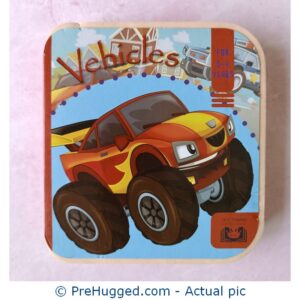
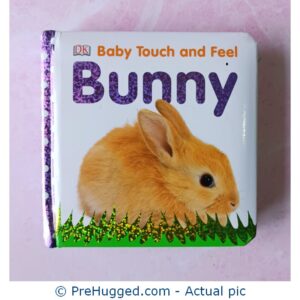
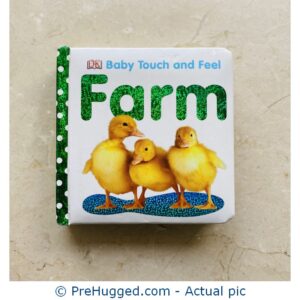
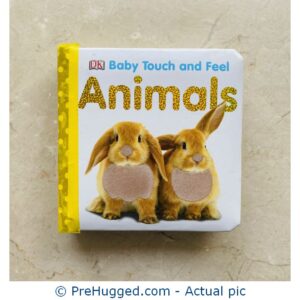
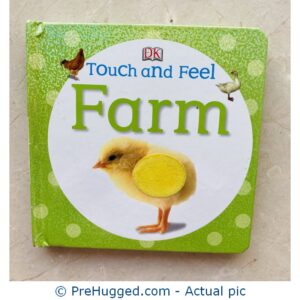
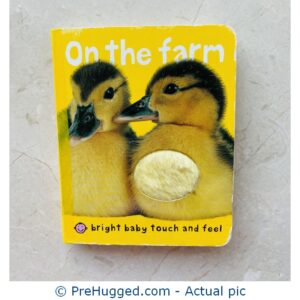
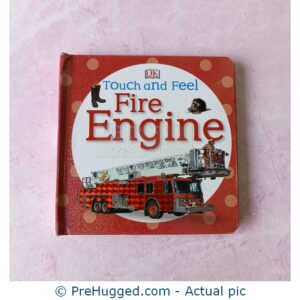
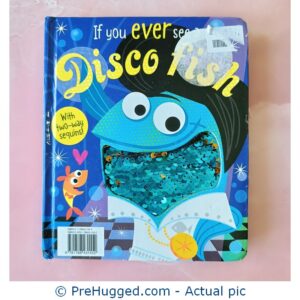
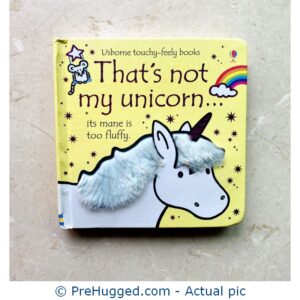
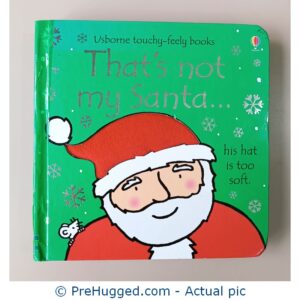
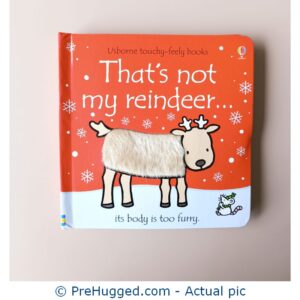
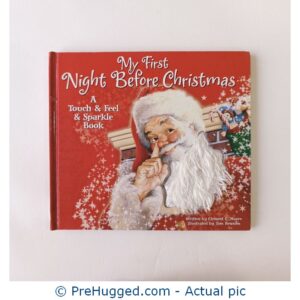
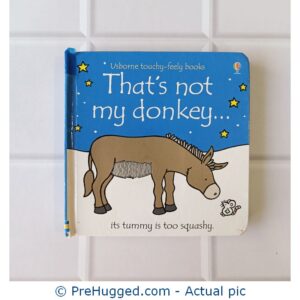
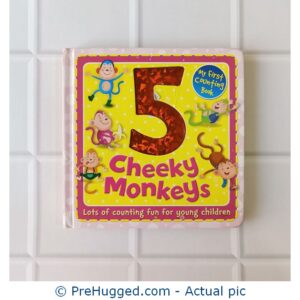
Showing all 14 resultsSorted by latest
Your Guide to Buying Touch and Feel Books for Babies
What Their Hands Are Already Telling You
Touch is the first sense to fully arrive. From the earliest weeks, you’ll notice them gripping whatever meets their palm — not by choice, but by reflex. By three to four months, that reflex becomes intention. They start reaching deliberately, gaze fixed before their hand moves.
At six months, everything heads to the mouth. That sounds like mess — it’s actually how babies read surfaces. The mouth is more sensitive to texture than the fingertips at this age. Mouthing is exploration.
Between nine and twelve months, the hands get more precise. A raking motion gives way to a pincer grip — thumb and index finger working together. On a touch and feel page, you’ll see the shift: they stop pressing broadly and start targeting specific patches.
Once language arrives, the experience changes again. A one-year-old presses something soft and looks up at you. An 18-month-old tries to say the word for it. A two-year-old connects the texture to something they already know.
Why Texture Is the Point, Not the Decoration
Touch and feel books aren’t illustrated books with patches added. The texture is the content — and that distinction matters developmentally.
Tactile discrimination — the ability to detect and interpret differences in surface quality — builds rapidly through infancy. Each time a baby moves their hands from soft to rough to smooth, they’re constructing a sensory framework that language will eventually name.
Your voice is the other half. When you say “that’s scratchy” while their hands are moving, you’re linking sensation to word. That shared attention moment — hands on a texture, your voice naming it — is where early vocabulary grows. The texture draws them in. The conversation does the developmental work. Flat illustration can invite that conversation, but it can’t start it this way.
Choosing from This Handpicked Collection — Where to Start
Age is the most useful filter, because the hands change so much in the first three years.
For the youngest babies, large patches with clearly distinct textures work best — one sensation per page, with enough surface area for a whole palm to press against. Contrast is what matters most at this stage.
Once the pincer grip develops, around nine to twelve months, books with more varied textures make sense — fluffy beside a lamb, rough beside tree bark. The pairing is what starts the naming conversation.
For toddlers, look for texture woven into simple narrative. A two-year-old who can say “scratchy” wants to understand what scratchy things are. Animals hold consistently across every age — the associations between fur, feathers, and scales are intuitive and lasting.
Every title in this collection is shown in actual photos of the exact copy available. Condition and format, together, before you decide.
Why Only Some Touch and Feel Books Make our PreHugged Collection
Most touch and feel books look appealing. Far fewer survive what babies actually do to them — palm-pressing, finger-probing, daily handling over months.
This collection is selected for durability first. Usborne’s “That’s Not My…” series forms a significant part of it — not because of the brand name, but because of how the format is engineered. The tactile patches adhere to a construction standard that cheaper editions routinely don’t match, and in a preloved copy, that difference shows. A well-handled Usborne title can still have patches that are fully intact and clearly distinct. Many cheaper editions, with far less use, may not.
Visual condition alone isn’t the criterion. A book can look fine and feel flat — textures no longer meaningfully different from each other, soft and rough indistinguishable under a fingertip. When that happens, the book has lost the point of its format. That copy doesn’t make it into this collection.
What does is a book with something real still there.
The PreHugged Check for Touch and Feel Books
The main concern with a preloved touch and feel book isn’t general wear. It’s texture integrity — and there are two separate reasons that matters.
A lifting patch is a safety issue. For a baby who puts everything to their mouth, a loose edge is a choking risk. A worn-flat patch is a different kind of problem: the texture is gone, and with it the developmental value of the format.
Every copy here is inspected for this specifically. Each tactile patch is checked for full adhesion — every edge, not just the visible centre. Texture distinctness is tested between adjacent surfaces: soft should feel different to rough, smooth different to bumpy. Board and page structure is checked throughout. Everything is sanitised before it ships.
One patch that lifts, one texture that’s worn flat — the book doesn’t go up.
What that means for you: the hardest question when buying preloved for a baby — can I actually trust this? — has already been worked through, by parents who’d ask themselves the same thing.
