
Sound Books
Showing 1–20 of 23 resultsSorted by latest
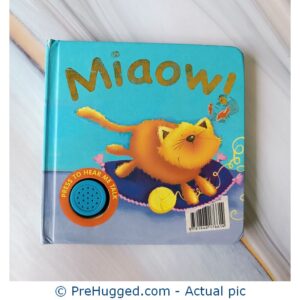
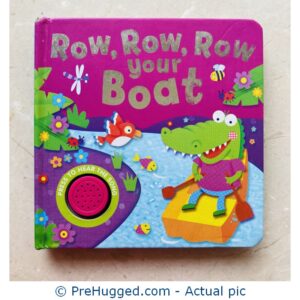
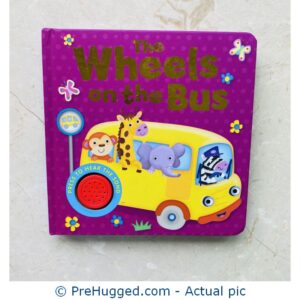
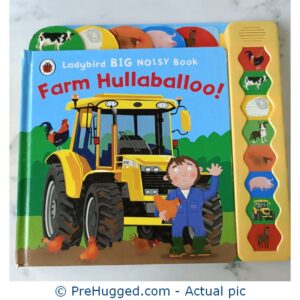
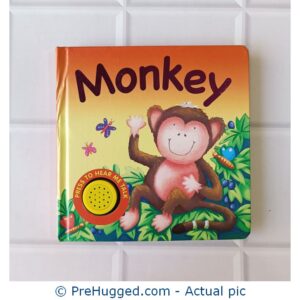
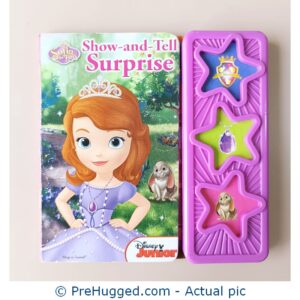
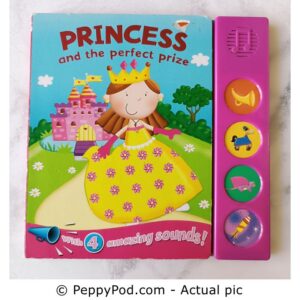
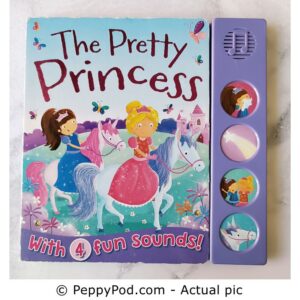
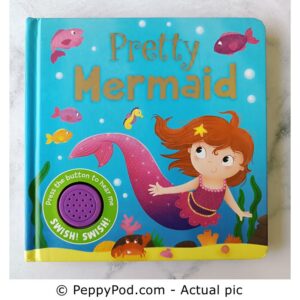
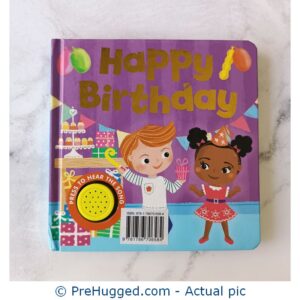
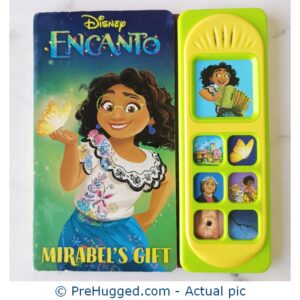
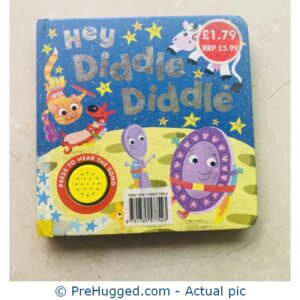
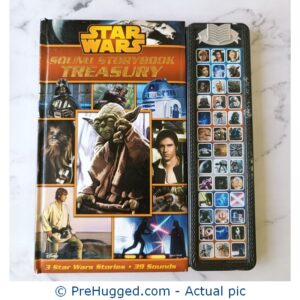
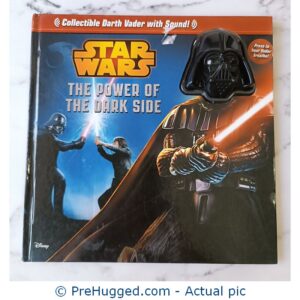
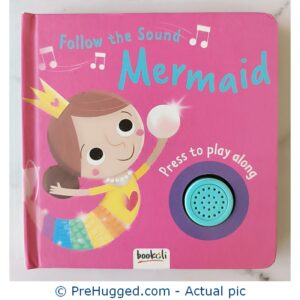
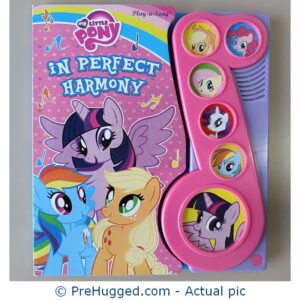
Showing 1–20 of 23 resultsSorted by latest
Sound Books for Kids: Choosing One That Still Works — and Still Adds Something
A sound book is bought for one reason: because it makes sounds. That makes it a different kind of purchase from any other book on a shelf — and a different kind of preloved purchase too. When the audio mechanism works, it does something an illustrated page alone cannot. When it does not, what you have is a book that looks like it should do something but does not. This guide covers how to choose a sound book that genuinely earns its place, and what matters specifically when you are buying one that has been used before.
The Stage These Books Are Built For — and What You Might Notice
Shared reading can begin from birth — babies respond to the rhythm and tone of a familiar voice long before they understand the words being spoken. From very early on, what paediatricians consistently recommend is not a particular format but a particular kind of interaction: books used as a starting point for talking, pointing, naming and responding to the child’s cues.
You might notice your baby stilling or brightening when you press a button and an animal sound plays — not because they understand what an elephant is, but because the sound is interesting and it came from something you did together. A little later, around eighteen months, many children begin to point at the picture on the page and look at you, waiting. That moment — the picture, your word for it, the sound that follows — is the interaction that makes a sound book more than a toy.
By around two, children may begin pressing the buttons themselves, with purpose. They understand that the action produces the response. They might press the same button repeatedly, which is not boredom — it is the pleasure of predictability at a stage when cause-and-effect is genuinely absorbing. By three and four, the format can carry richer content: songs they can join in with, spoken vocabulary in a second language, animal or nature sounds they can now describe rather than simply react to.
The honest note here is that the developmental case for sound books rests on the same evidence as shared reading generally — the sound feature creates an additional prompt for interaction, but the interaction itself is what matters. A sound book used in isolation is less valuable than the same book used with a curious adult asking “what was that?” after every press.
What a Sound Book Does That an Ordinary Book Does Not
The defining feature of a sound book is the picture-word-sound loop. The child sees something on the page, hears a word or sound associated with it, and has a moment to connect the two — often with an adult adding a question, a name or a conversation. That loop is the format’s genuine contribution, and it is most useful when the sound is doing something the illustration alone cannot do: providing the actual sound of a cow, playing the melody of a familiar rhyme, speaking a word the child is learning to associate with a picture.
That is different from a sound book where the audio is decorative — random sound effects that bear no clear relationship to the content on the page. The most useful sound books are ones where pressing the button tells you something about what you are looking at, not simply adds noise to it.
This is also what distinguishes sound books from other interactive formats. A lift-the-flap book creates anticipation and reveal. A touch-and-feel book provides texture. A sound book provides audio — and that is the reason to choose it rather than either of the others. If the audio is incidental to what you want from the book, a different format will serve better.
Evidence on whether electronic interactive books produce stronger developmental outcomes than print books is genuinely mixed. Some studies find that audio and interactive features increase children’s attention and engagement; others find that print books produce richer parent-child conversation. The honest answer is that the format is a tool, and what you do with it matters more than the tool itself.
Choosing the Right PreHugged Sound Book for Your Child
The first question to ask is: what is the audio actually doing?
Animal and environment sounds give a child a concrete auditory reference for a picture they are looking at — useful at the earliest stages, when the connection between a word, an image and a real-world sound is still being built. First-word sound books that speak the word alongside the picture add an audio layer to vocabulary building. Musical and nursery-rhyme sound books are built for participation — singing along, anticipating the next line, joining in with a rhythm. Story sound books add audio texture to a narrative. Phonics and pronunciation sound books are a different purchase again, closer to the Phonics Books category when systematic decoding is the goal.
Knowing which of these you need is more useful than knowing how many buttons the book has.
For younger children, fewer, clearly located buttons tend to work better — easier to find, easier to understand and less likely to produce accidental audio when the book is being turned. For preschoolers, richer search-and-find or multi-sound formats can sustain longer engagement because the discovery is part of the experience.
Look at the relationship between the sound and the picture. The audio should correspond clearly to what is shown on the page, not simply exist alongside it. A sound book where you have to search for which button relates to which image is less useful than one where the connection is immediate and obvious.
If language is a consideration — and in many Indian homes it is — sound books are one of the few formats where the language of the audio matters as much as the language of the text. Hindi, bilingual and Indian-language sound books exist and are worth considering alongside English-only options, depending on which language you most naturally use together.
How This PreHugged Collection Is Selected — and What Makes a Sound Book Worth Bringing Home
Not every book with buttons belongs in this collection. The selection criteria for sound books at PreHugged are more specific than they are for any other format, because the format itself creates a higher bar.
What is looked for: a sound mechanism that is genuinely integral to the book — not decoration, but the reason the book exists in this format. Audio that corresponds clearly and usefully to the content: animal sounds matched to animal pictures, spoken words matched to labelled images, melodies matched to the rhymes on the page. Titles where the interaction adds something that a printed version of the same content could not. And content quality that makes the book worth returning to — because a sound book that a child wants to press again is doing its job, and one that sits untouched after the first day is not.
Publishers with a track record in the format — Usborne, DK, Campbell — produce sound books where the button placement, audio design and content relationship have been developed with the target age in mind, which makes them easier to assess reliably. Where these titles appear in the collection, it is because the audio mechanism and the content are coherent together, not because of where they were published.
What does not make the cut: books where the sound feature is peripheral to a concept or story that would work just as well without it; titles where the button-to-content relationship is unclear or arbitrary; and any copy where there is visible concern about the condition of the sound panel or battery area.
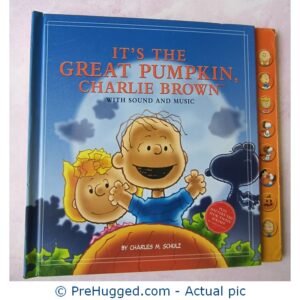
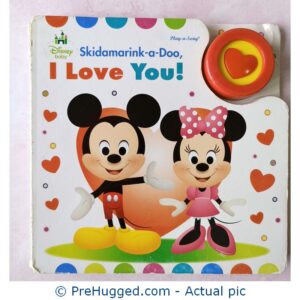
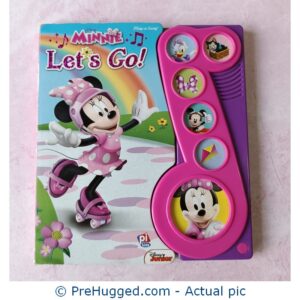
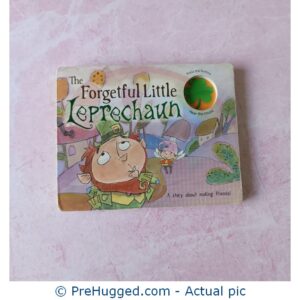
The actual photos of the exact copy, and on many books actual video too, are especially important here. For a sound book, you are not just choosing a title. You are choosing a physical object with electronics in it, and seeing the actual copy is how you make that choice with confidence.
The PreHugged Check — What We Look for in Every Sound Book
The preloved risk in a sound book is unlike any other category. A book can have clean pages, a tight binding and bright illustrations while the thing that makes it a sound book — the audio — has stopped working. That is not wear. That is a fundamental change in what the product is.
Every copy in this collection goes through the PreHugged Check before it is listed. For sound books, this means the condition of the sound panel, the buttons and the battery area are examined as part of the physical inspection — not as an afterthought. Pages are checked for completeness. The overall physical condition is assessed with the question that is specific to this format: does this copy still function as a sound book, or has something about its condition changed what it is?
The exact-copy photos shown for every listing, and on many books actual video too, exist for a particular reason here. A sound book needs to be seen: its panel, its buttons, its physical state, before you commit to buying it. That transparency is not standard in the used-book market. At PreHugged, it is.
Sanitisation is carried out on every copy before it is packed.
What this means for you is that the question a parent most needs answered when buying a preloved sound book — does this actually work? — is one we take seriously before a copy is ever listed. You are looking at the exact book, shown as it is, checked by a parent who understands that in this category, the pages are only part of what you are buying.
