
Lift the Flap Books
Showing all 3 resultsSorted by latest
-
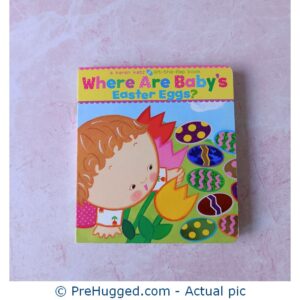
-
Board Books, Lift the Flap Books
Original price was: ₹295.00.₹250.00Current price is: ₹250.00. Add to cart -
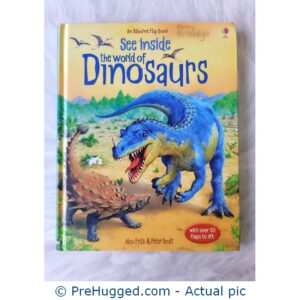
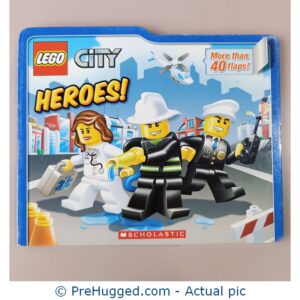
Showing all 3 resultsSorted by latest
Lift the Flap Books: A Parent’s Guide to Choosing and Buying With Confidence
Lift the flap books earn their place in a young child’s collection because the format does something no other book does: it puts the child in charge of the reveal. That shift — from watching a page to actively discovering what is underneath — changes how a child engages with a book, and it changes what you can do together with it.
This guide covers what to look for at each stage, how to choose the right book for your child’s age and purpose, and what specifically matters when you are buying this format preloved.
How Children Grow Into These Books — and What You Might Notice at Each Stage
The youngest babies do not lift flaps independently, and they do not need to. Paediatricians recommend introducing books with interactive features — including flaps — from around six months, when babies begin to notice and explore book surfaces. At this stage, the book is something to look at and touch together; you lift the flap, and your baby watches, reaches and begins to understand that something interesting happens when you do.
Through the toddler months, you might notice them starting to point at pictures before the flap goes up — telling you what they already expect to find. By around eighteen months, many children are actively reaching for the flap themselves, not just waiting for you. The reveal becomes something they initiate, and the repetition of a favourite book becomes something they demand.
By two and three, a good flap book offers more than surprise. Children at this stage can answer questions about what they think is underneath, describe what they found, and connect the reveal to what came before. The book becomes a conversation rather than a performance — you ask, they predict, the flap confirms or surprises, and then you talk about it.
For older children, the format keeps working when the content earns it. Question-and-answer flap books on animals, the human body, science or the world give a child something genuinely worth discovering under each flap — not just a picture, but an answer or an explanation. At this stage, the interaction is less about peek-and-surprise and more about unlocking information in manageable pieces.
Why the Flap Mechanism Makes These Books Different
The defining structure of a lift-the-flap book is simple: there is something visible, something hidden, and a physical action that connects them. That structure does more than entertain.
The visible clue creates anticipation. The anticipation invites a question — what do you think is under there? The physical reveal gives the child an active role. And the discovery opens a natural moment for conversation: naming what you found, comparing it to what you expected, or talking about what it means.
Research consistently shows that shared picture-book reading supports children’s language development most powerfully when it is interactive — when adults use the book as a prompt for pointing, naming, questioning and responding, rather than simply reading the words aloud. Lift-the-flap books are built around that kind of interaction. The format does not produce those conversations automatically, but it creates the conditions for them more naturally than a static page does.
This is also why the format is genuinely different from sound books, touch and feel books, and pop-up books — all of which involve physical interaction, but through different mechanisms and with different reading experiences. A lift-the-flap book asks the child to be the one who decides when the reveal happens. That small shift in agency matters at this stage.
Choosing the Right PreHugged Lift the Flap Book for Your Child
The most useful question is: what is my child currently doing with books, and what am I hoping this book will give us to do together?
For babies and younger toddlers, favour large, easy-to-lift flaps on sturdy board pages. The interaction should be simple: a familiar animal hiding, a character playing peekaboo, a word with its picture underneath. The text is almost secondary at this stage; the reveal is the experience.
For children around two to three, look at what the flap is actually doing. Does lifting it answer a question that the page sets up? Does it reveal something worth talking about — a different perspective, a hidden detail, a surprise that connects to the story? Flaps that simply decorate a page rather than add to it lose their engagement value quickly.
For older children seeking more from the format, look at content depth. The best informational flap books reveal something genuinely useful — an explanation, a fact, an answer to a question a child might actually ask. Check whether the reveals across the book build toward understanding something, or whether they are isolated surprises with no connection between them.
Across all ages, the flap should feel manageable — not so small or stiff that a child needs help every time, and not so large and loose that it becomes a tearing risk within the first week.
Why This PreHugged Collection Is Curated Differently From a General Book Search
Finding a good lift-the-flap book is straightforward. Finding one where every flap still works as the publisher intended is a different task — and it is the one PreHugged’s parent-curators have already done for you.
Every title in this collection is chosen for two things: content worth discovering and a mechanism that still delivers the discovery. That means the reveal under each flap must be visually clear, the hinge must open without resistance or tearing risk, and the book must have enough repeat-use value to justify bringing it into your home.
Publishers like Usborne and DK have developed dedicated lift-the-flap ranges across a wide span of ages and subjects — from simple board-book peekaboo titles for babies through to detailed question-and-answer books on science, the body and the natural world for children of five, six and seven. These titles appear prominently in this collection not because of where they were made, but because their flap construction, content quality and level progressions are consistent enough to assess reliably. When a book has been individually examined rather than bulk-listed, that consistency matters.
What does not make the cut: books where a flap or two is present but the content works just as well without lifting it; titles where the reveal adds nothing beyond the information already visible on the page; and any copy where the interactive parts are not in a condition that makes the experience worth having.
We show the exact book copy being sold through actual photos, and on many books actual video too, because with a flap book the cover and the spine tell you almost nothing about whether the book still does what it was made to do.
The PreHugged Check — What We Inspect in Every Lift the Flap Copy
The condition risks in a preloved lift-the-flap book are more specific than in almost any other format. A general used-book check — pages present, cover intact, no major damage — can pass a flap book that is missing its most important feature. A torn flap, a hinge that no longer opens cleanly, or a reveal that has been scribbled over changes the book fundamentally. It is not worn; it is incomplete.
Every copy in this collection goes through the PreHugged Check before it is listed. For lift-the-flap books, this means the flaps themselves are examined — not just the pages around them. Each flap is checked to confirm it is present, that the hinge opens without tearing risk, and that the image or text underneath is visible and unobscured. Binding is checked for firmness, because repeated flap-lifting puts specific stress on a book’s spine in a way that ordinary page-turning does not. The overall condition is assessed with the question that matters for this format: does this book still deliver the interaction it was designed for?
Sanitisation is carried out on every copy before it is packed.
What this means for you is that the specific anxiety of buying a preloved flap book — will the flaps actually be there and intact when it arrives? — has been handled before you see the listing. You are looking at the exact copy, shown as it is, checked by a parent who knows that with this format, the pages are only half the story.
