
Picture Books
Showing 21–26 of 26 resultsSorted by latest
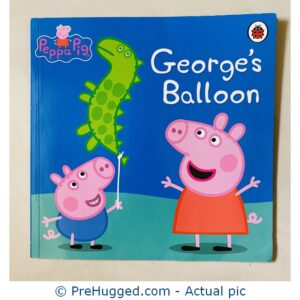
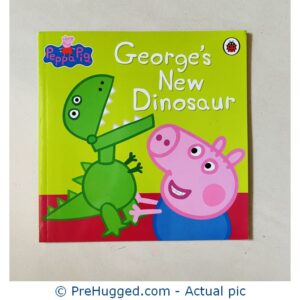
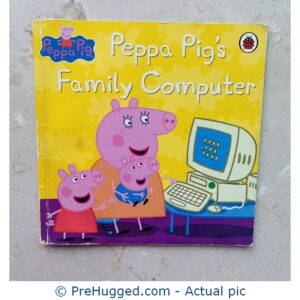
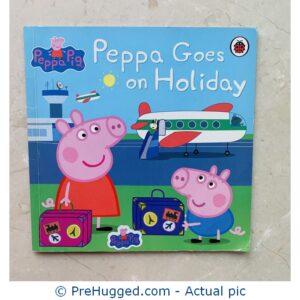
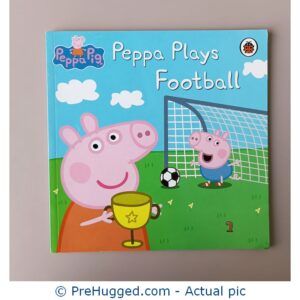
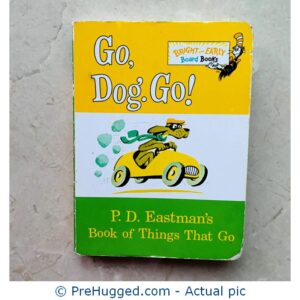
Showing 21–26 of 26 resultsSorted by latest
Picture Books for Kids: How to Choose Stories Worth Reading Again and Again
Picture books are a specific kind of book. The illustrations are not decoration alongside the story — they are part of how the story is told. A child who cannot yet read a word can follow what is happening on a page, predict what comes next and tell you what they think a character is feeling, because the artwork is doing that work. That is what makes picture books a distinct category from general story books, and it is what makes choosing a good one — and a good preloved copy — worth thinking about carefully.
How Children Participate in Picture Books at Different Stages
You might first notice your toddler pointing to something on a page and looking up at you — waiting for the word, not the story. Around two, that is exactly where many children are: making a connection between a picture and a name, one image at a time. At this stage, a picture book with clear, expressive illustrations of familiar things gives them a lot to point at and a lot to talk about.
A little later, the engagement shifts. They start to describe what they see rather than just identify it — “the dog is sad” rather than simply “dog.” They begin to connect what happens in a book to something from their own life, unprompted. You might find them picking up a book about a new sibling or a first day of school and talking about it in a way that is very clearly about something else entirely.
By around four, many children are asking questions mid-story, making predictions, and insisting on particular books repeatedly — not because they have forgotten them, but because familiarity with a favourite story is itself satisfying. They may begin to retell it in their own words, filling in remembered phrases or inventing alternatives. By five, that retelling becomes more structured: a beginning, something that happened, how it ended.
What this progression describes is not a ladder to be climbed. A child can be pointing at pictures and retelling stories in the same week, depending on the book. The useful observation is that picture books can meet a child across that entire range — the same book can work differently depending on what the child brings to it on a given day.
Why the Picture-Text Relationship Is the Point
What makes a picture book work at this stage is that the child does not need to read the words to be inside the story. The illustrations are the access point — and in a strong picture book, they are doing things the words alone cannot do: showing a character’s expression the text does not name, hinting at what happens next before the page turns, or holding a detail that only becomes meaningful on the third read.
That shared access is also why picture books are particularly suited to the kind of reading that has the strongest evidence behind it. Research consistently shows that shared reading supports children’s language development most effectively when it involves conversation — pointing, naming, questioning, connecting, discussing. A picture book gives you and your child something rich enough to sustain that conversation across many readings. A book that is only as deep as its text does not.
This is also what distinguishes picture books from simpler formats. A concept book has a teaching purpose; a phonics reader has a decoding purpose. A picture book’s purpose is the story itself — and the conversation the story opens between you.
Choosing the Right PreHugged Picture Book for Your Child
The most useful starting point is not age but participation: what is your child currently doing with books when you read together?
If they are pointing at pictures and naming things, look for books with clear, expressive illustrations of characters and objects they will recognise — animals, everyday scenes, familiar emotions. The text matters less at this stage than the visual richness and how easy it is to have a conversation around each page.
If they are beginning to follow a sequence of events — something happened, then something else, then it resolved — look for books with a clear narrative arc. Problem and solution, cause and effect, a character who wants something and eventually gets (or does not get) it. The illustrations should move the story forward rather than simply showing what the text says.
As the stories become more complex, the themes become a useful selection criterion. Books about feelings, friendships, new experiences, family and everyday worries are not just emotionally appropriate — they give a child language for things they may not yet have words for. A good picture book on a difficult theme can open a conversation that would not otherwise have happened.
Re-readability is worth considering. A picture book that reveals something new on the fifth read — a background detail, a recurring motif, a line that means something different after the ending — has more long-term value than one that exhausts itself on first encounter.
One distinction worth making: picture books and easy readers are not the same thing. A picture book may have sophisticated language and complex ideas precisely because an adult is reading it aloud. Do not choose a picture book based on whether the child can read it independently — choose it based on whether the story is worth sharing.
What Makes a Title Worth Choosing — and How This PreHugged Collection Is Selected
The books that make it into this collection are chosen by parents who read them, not just reviewed them. That means the selection criteria are different from a title list built on bestseller rankings or publisher catalogues.
What is looked for: illustrations that genuinely carry narrative meaning — where what is shown on the page adds something beyond what the words say. Stories with enough emotional or visual substance to sustain more than one reading. Characters that a child will want to return to. Language that sounds like something worth reading aloud, not a caption accompanying a picture.
Books from publishers with a track record in the picture-book form — Julia Donaldson, Eric Carle, Oliver Jeffers, Usborne — appear in this collection not because of where they were published but because the illustrated narrative quality in these titles is consistent and well-made, which makes them possible to curate accurately for a child at a specific stage.
What does not make the cut: illustrated books whose primary purpose is teaching a concept, practising phonics or completing an activity — those belong in their own categories. Books that are technically picture books but offer little to discuss, return to or discover. And any copy where the physical condition of the illustrations compromises the reading experience.
The exact-copy photos exist here for a specific reason: with a picture book, you are choosing an illustrated object, not just a title. Seeing this copy — its actual pages, its artwork condition — is how you know what you are getting.
The PreHugged Check — What We Look for in Every Picture Book
The particular concern with a preloved picture book is not just whether pages are present. It is whether the illustrations — which are doing as much storytelling work as the words — are intact.
A scribble over a character’s face changes what the child sees when the page opens. A torn corner that removes part of a scene changes what is available to talk about. A stain across a spread that happens to be the emotional centre of the story is not background noise — it is in the foreground of every reading.
Every copy in this collection goes through the PreHugged Check before it is listed. For picture books, this means pages are checked for completeness and correct order. Illustrations are checked for marks, scribbling or staining that would obscure meaningful artwork or text. Binding is checked for firmness, because picture books are repeatedly opened, turned and closed by small hands. The overall condition is assessed with the question that matters for this format: does this copy still tell the story as it was meant to be told?
Sanitisation is carried out on every copy before it is packed.
What this means for you is that the question a parent most needs answered before buying a preloved picture book — is the artwork actually intact? — has been handled before the listing goes live. You are seeing the exact copy, shown as it is, checked by a parent who knows that in a picture book, the illustration is not the wrapping. It is the book.
